Lisbon – Charming and Tasty
This is the fourth post in a series about our first European vacation. We booked a repositioning cruise aboard the Celebrity Apex, which would depart from Barcelona, Spain, sail west through the Straits of Gibraltar, stopping in Portugal, first Lisbon then two nights in Porto, with a final stop in La Coruna, Spain, before disembarkation in Southampton, England. This post is part of our Celebrity Apex Barcelona to Southampton series.
Sea Day on the Celebrity Apex
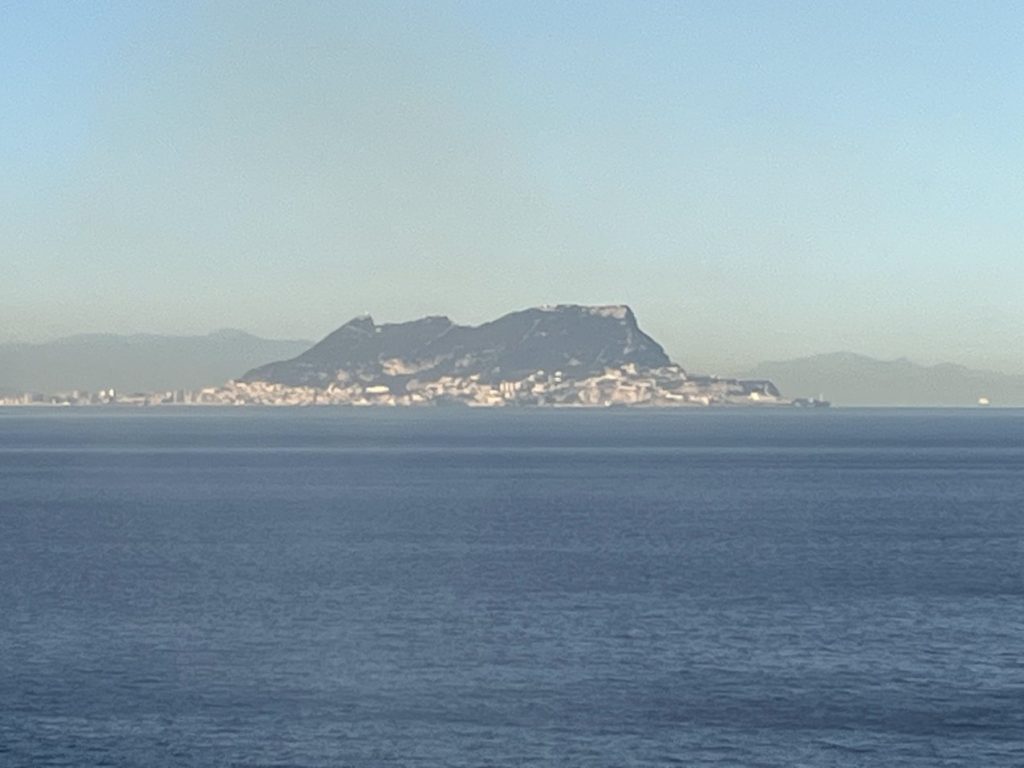
Our first day after embarkation was at sea, and after racing around Barcelona, it was a nice break. We won’t cover most of it here, devoting the majority of this post to Lisbon. However, two things stood out. First, it was kind of cool to be out on deck, as the ship passed through the Strait of Gibraltar, headed for the Atlantic Ocean with the Mediterranean Sea behind us.
It’s hard to explain, but the “Strait of Gibraltar” was a name from the maps and atlases of our childhood that I don’t think we’d ever contemplated visiting in the same way as a foreign country. The moment hits you differently when you realize that Africa is right there in plain sight on the left, and Europe to the right.
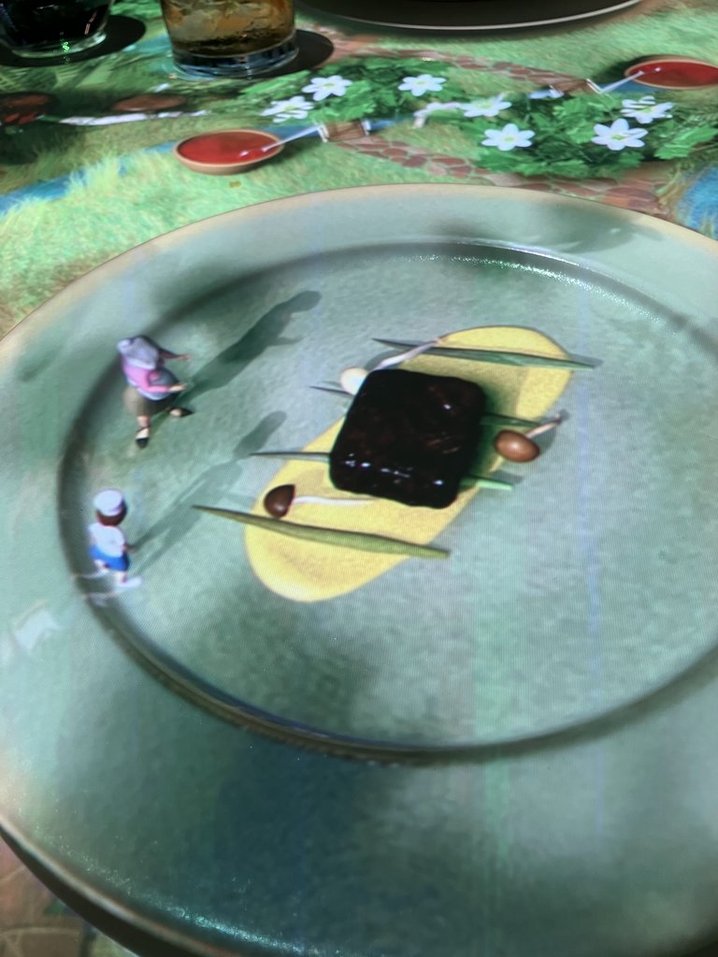
The second memorable experience was dinner at Le Petit Chef, which occurs inside Le Grand Bistro, on deck 5 across the Grand Plaza from Café al Bacio. The meal involves 3D projection-mapping animation combined with a curated multi‑course meal. A tiny chef prepares the meal right on your table, as the story unfolds. There are plenty of YouTube videos and reviews out there, but the underlying story and menu change over time, and can vary by ship. You can choose from the chef’s menu or an alternate menu, and some people have reported mixing and matching across them.
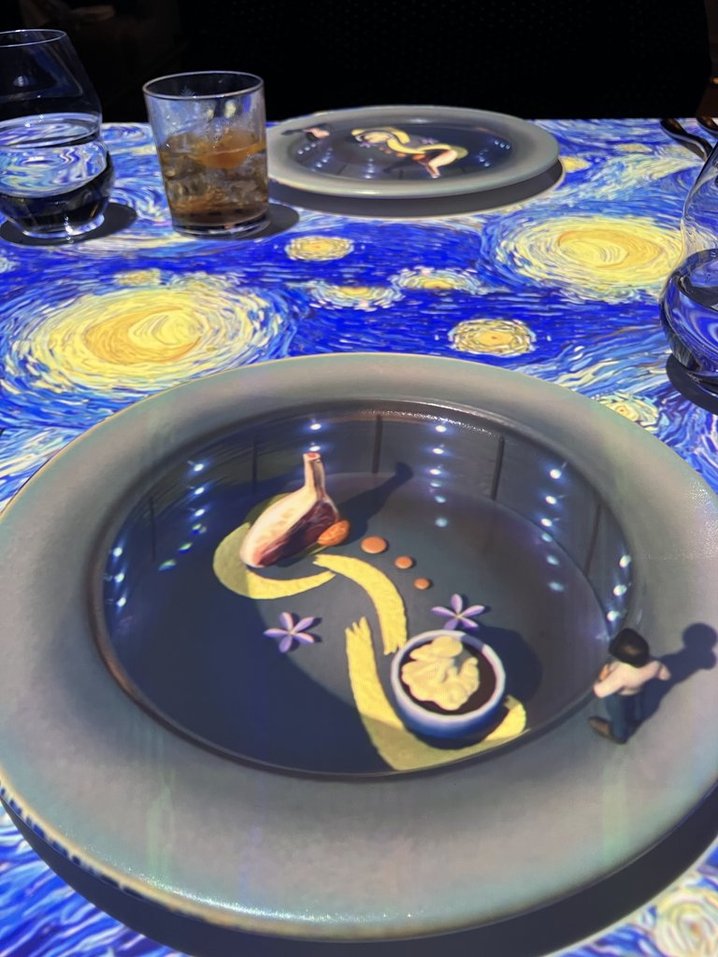
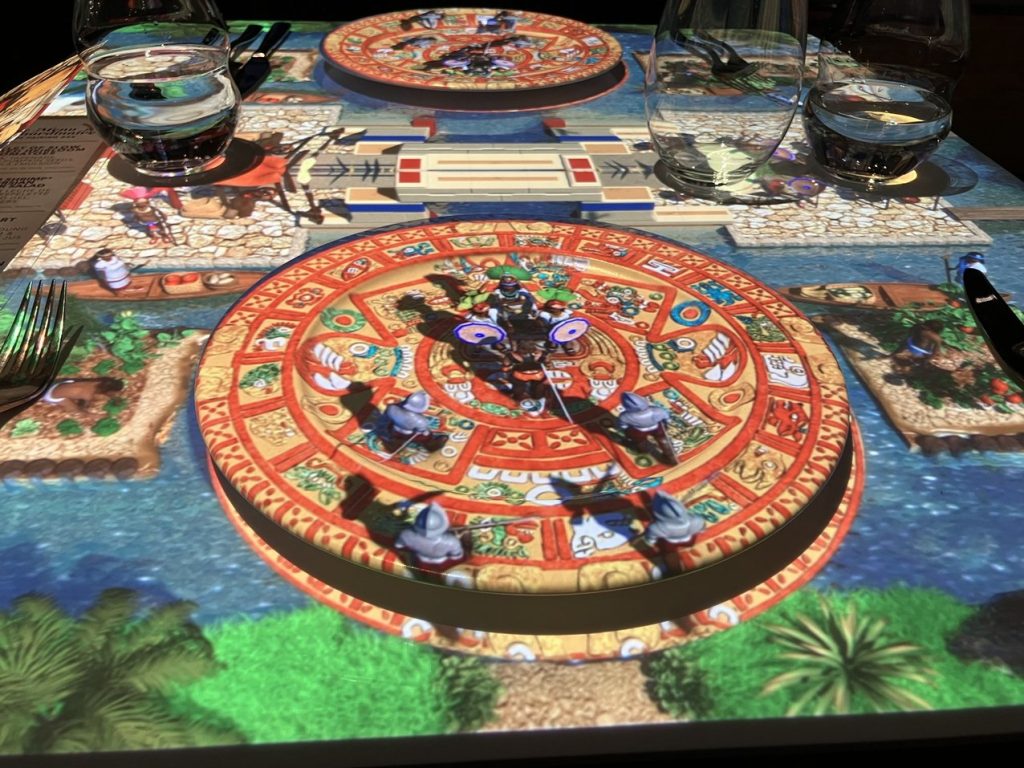
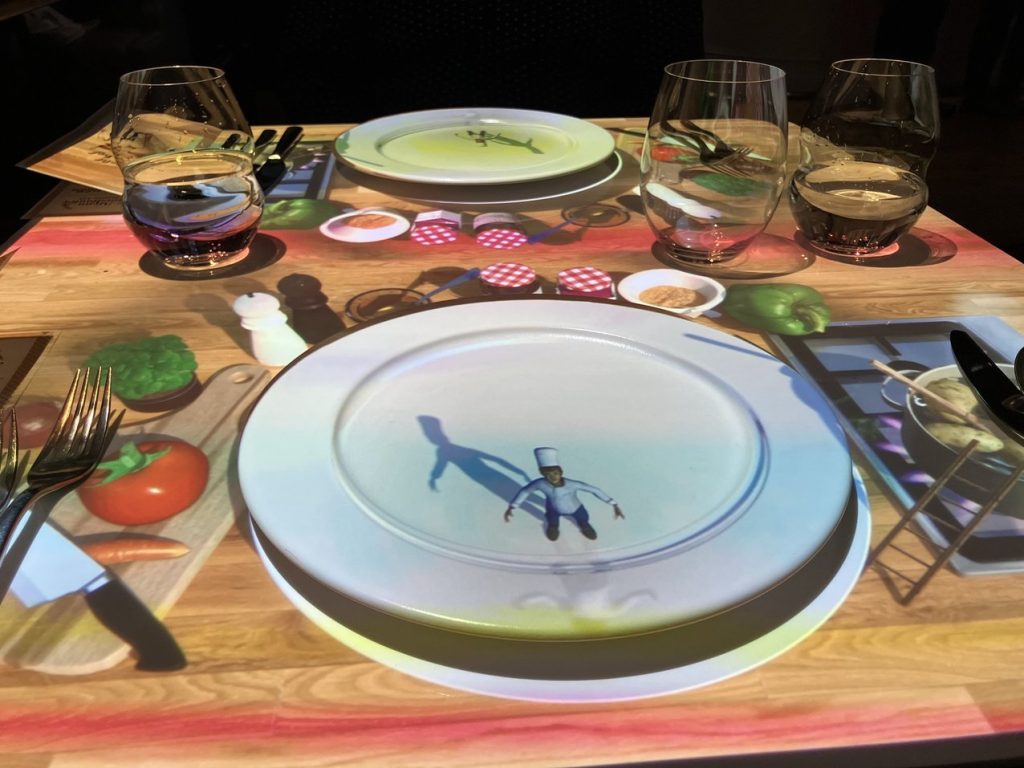
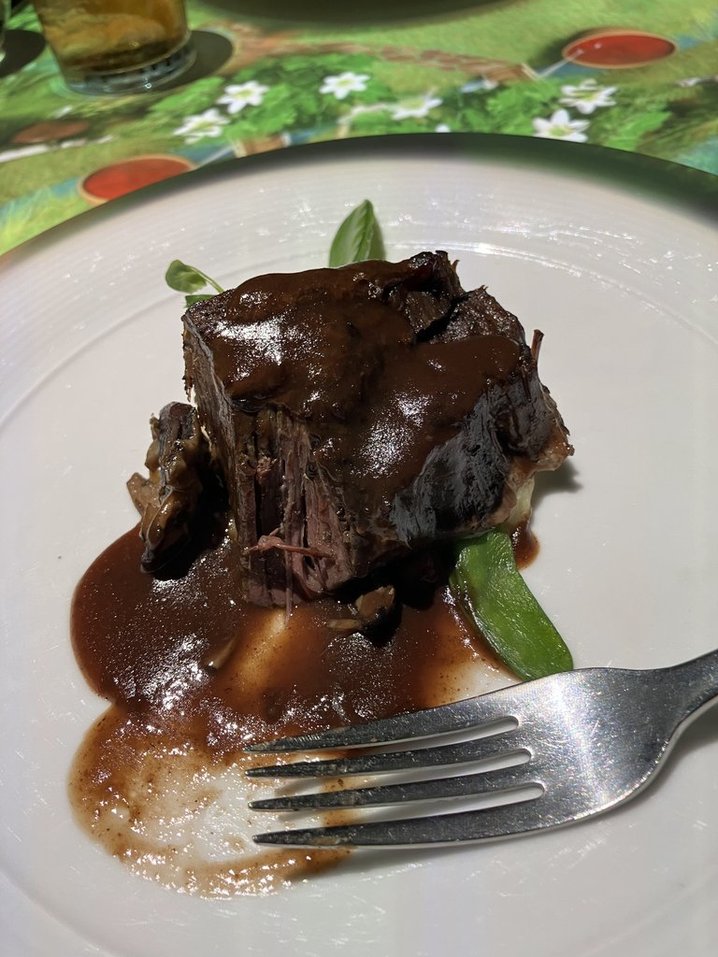
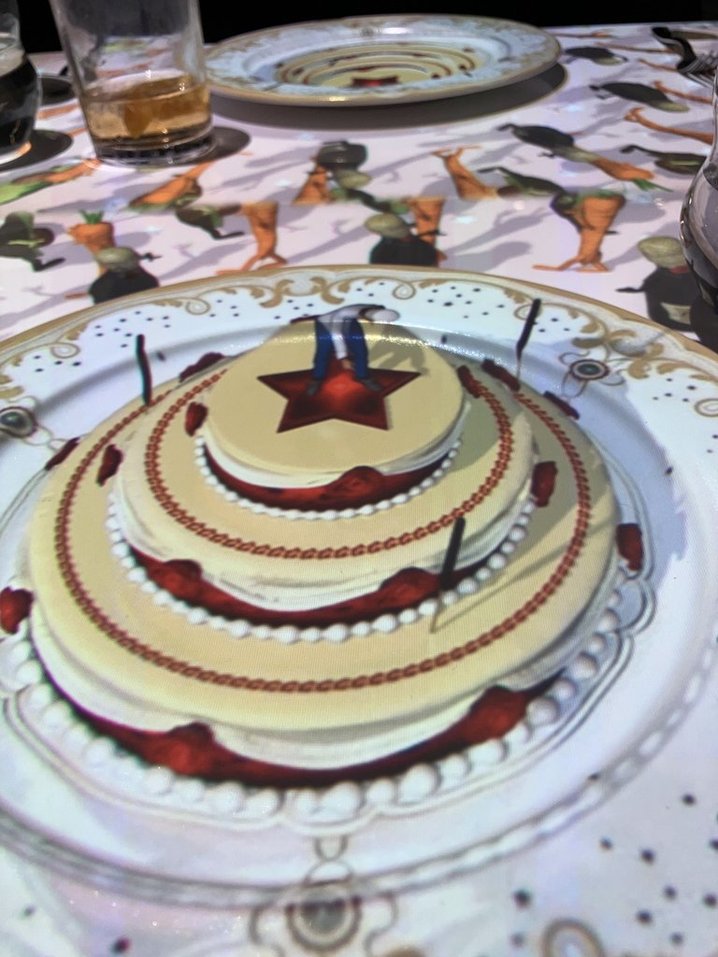
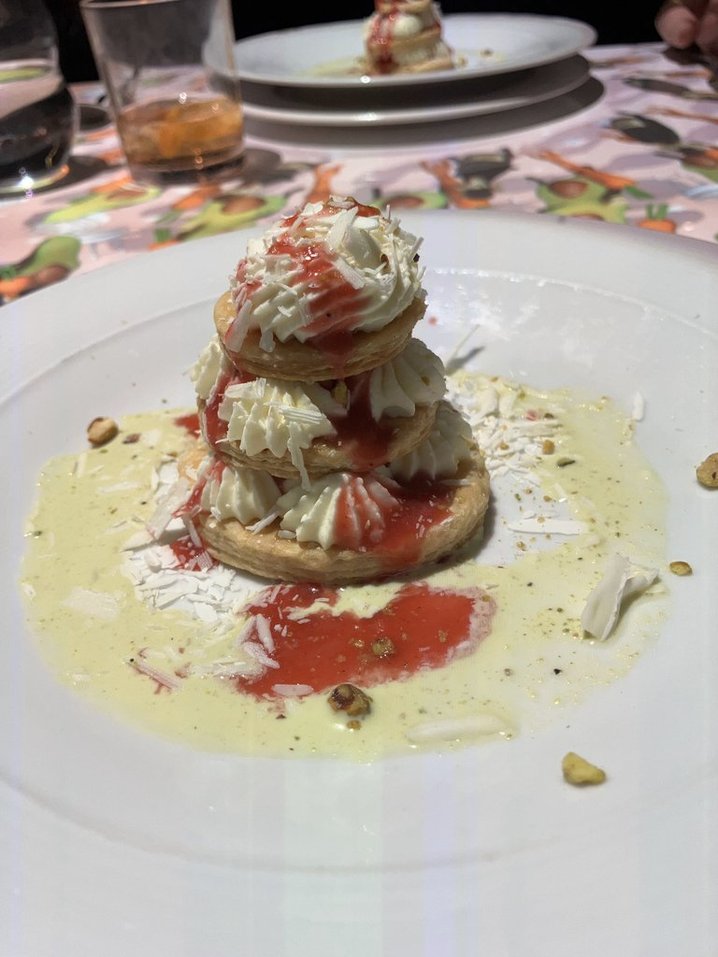
We went with the chef’s menu, which included a slow roasted heirloom tomato tartlet, a.k.a. salad, braised short rib for the entree, ending with a strawberry napoleon. Beautifully presented, and seamlessly integrated with the animation, each course was delicious, most especially the short rib. After the “show” wrapped up, the chef came out and hobnobbed with all the guests, a nice touch. The overall experience was unique, and, that evening, enjoyed by couples and +families. It’s worth reserving at least once.
Lisbon
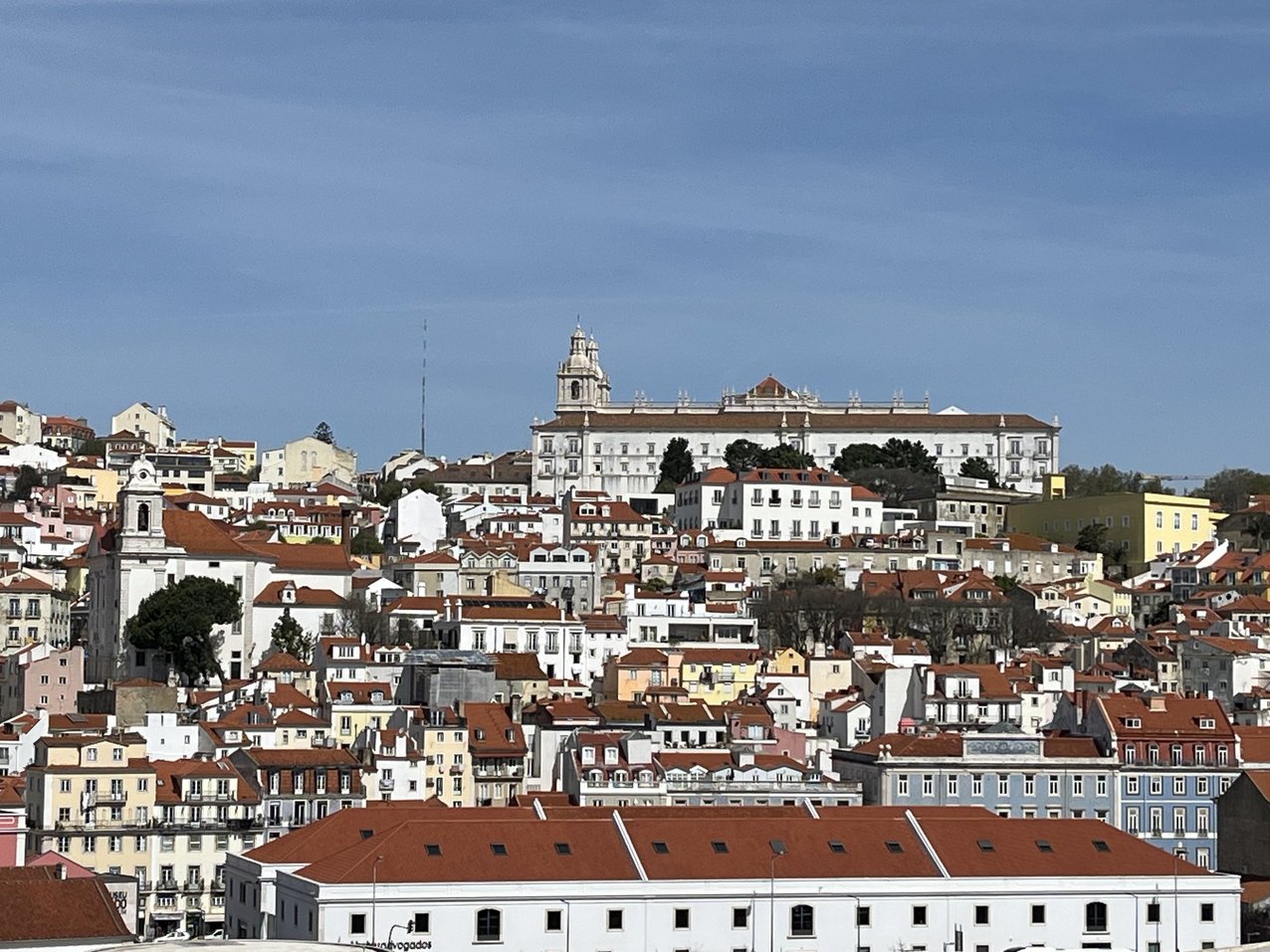
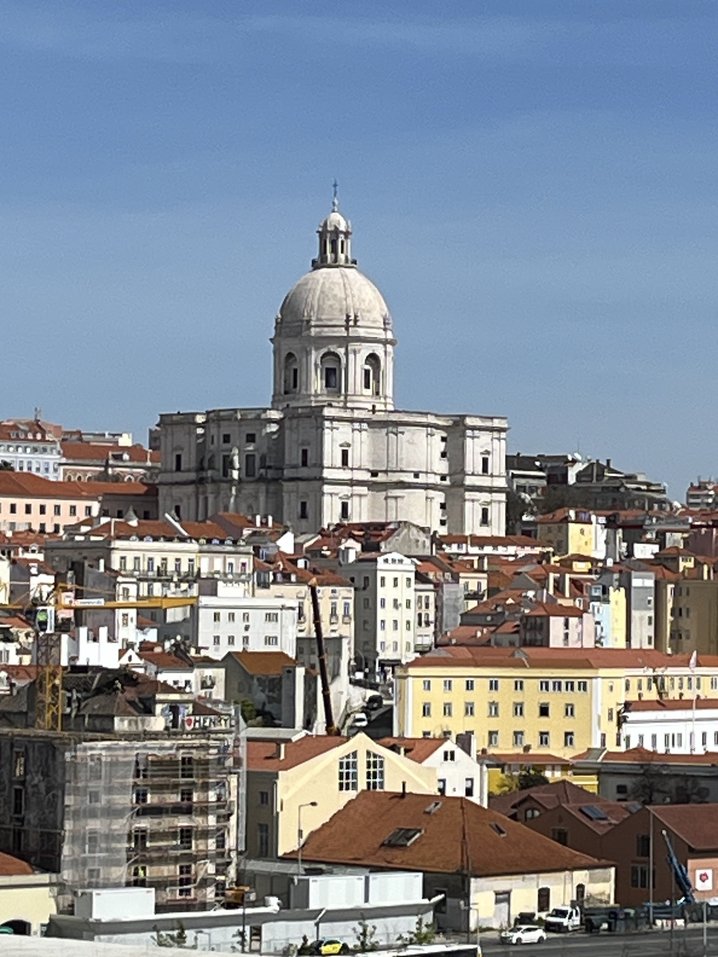
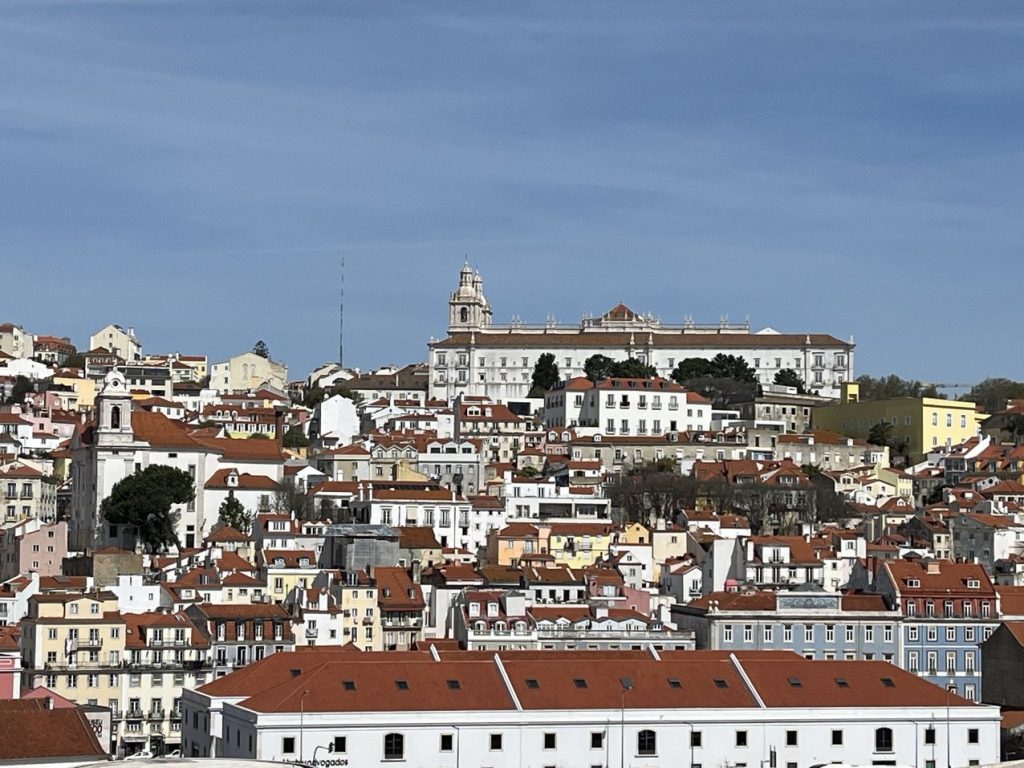
Late the next morning, the ship arrived in Lisbon. Compared with many European ports, which are far from the purported cruise destination, the port of Lisbon is right in the heart of the city. The view from our verandah showcases Lisbon’s densely packed collection of buildings with red-tiled roofs, characteristic of the city’s architecture.
Since most shore excursions arranged through the cruise company are considerably more expensive, we booked the Lisbon Highlights tour with Shore Excursions Group, a company many cruise vloggers have recommended. Though I did not realize it at the time, we had also used them for a shore excursion in Bermuda a few years prior. They guarantee to return you to your ship in time, which is often why people think they need to book excursions with the cruise company. This tour cost $70 per person, and then we added the excursion protection plan for another $7 per person, which, like travel insurance, guarantees a refund if for some reason we are unable to make the excursion.
After disembarking and making our way through and out of the cruise terminal, we quickly found our tour guide, John. There were six other passengers from our cruise on this tour, and once we had all arrived, we followed John to the comfortable tour van in the parking lot right beside the building. John spoke excellent English, and he later explained that in Portugal, all children learn English as a second language in primary school, and then can choose an additional language in 7th grade (age 12).
Lisbon has quite a few steep hills, and as the van set off from the port, up and down (but mostly up) countless narrow, winding city roads, I was glad we had a ride. The tour did not include going inside any locations that required separate admission, but as noted in the title, this was a highlights tour, with some sights visible as we drove slowly by,, but many that we got to step out of the van and approach.
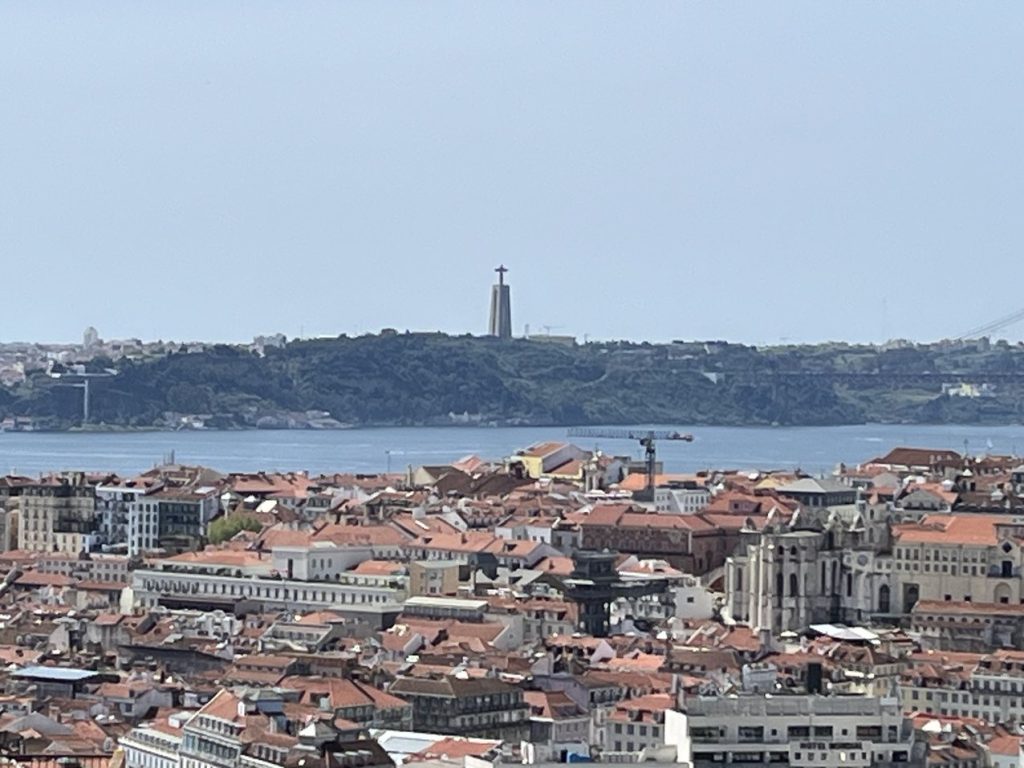
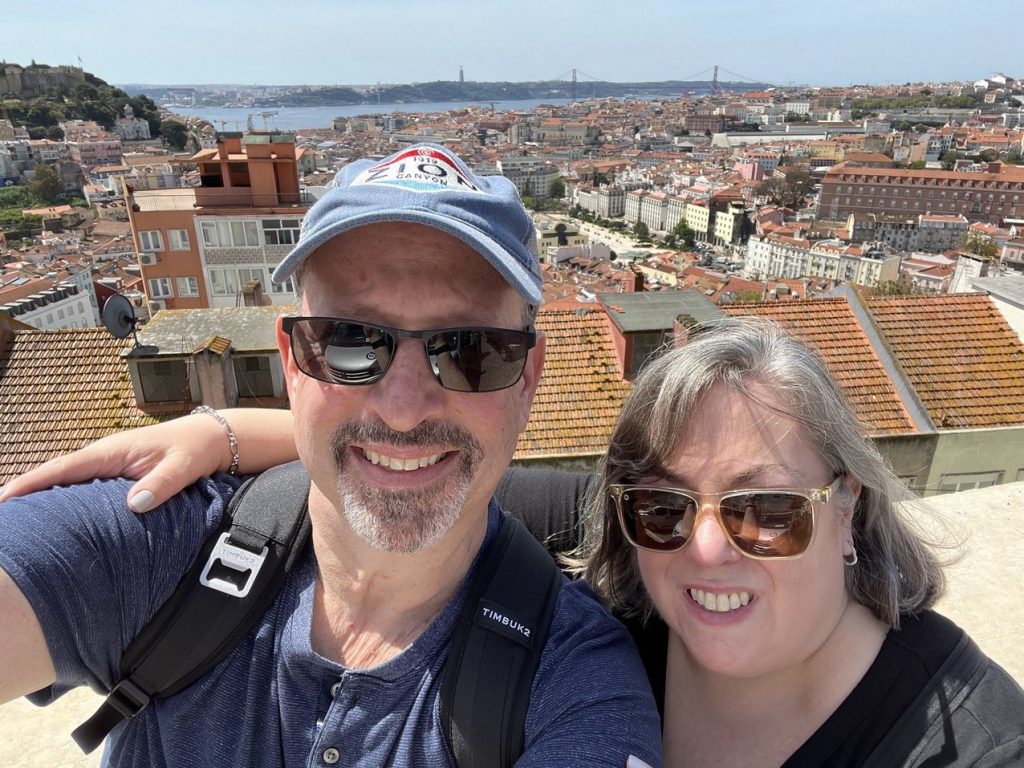
Our first stop was Miradouro do Senhora Monte, located at one of the highest points in Lisbon, in what is a blend of a park and Churchyard. From this vantage point, the views of Lisbon are unparalleled. Directly across the Tagus River is the Sanctuary of Christ the King, inspired by Rio’s Christ the Redeemer.
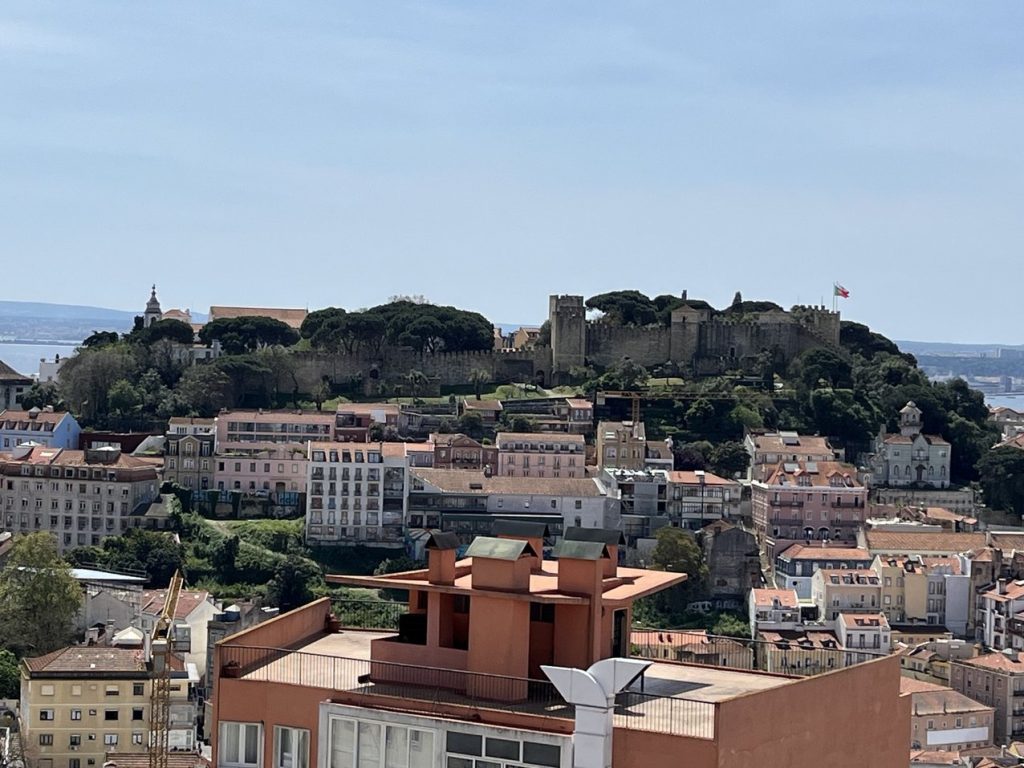
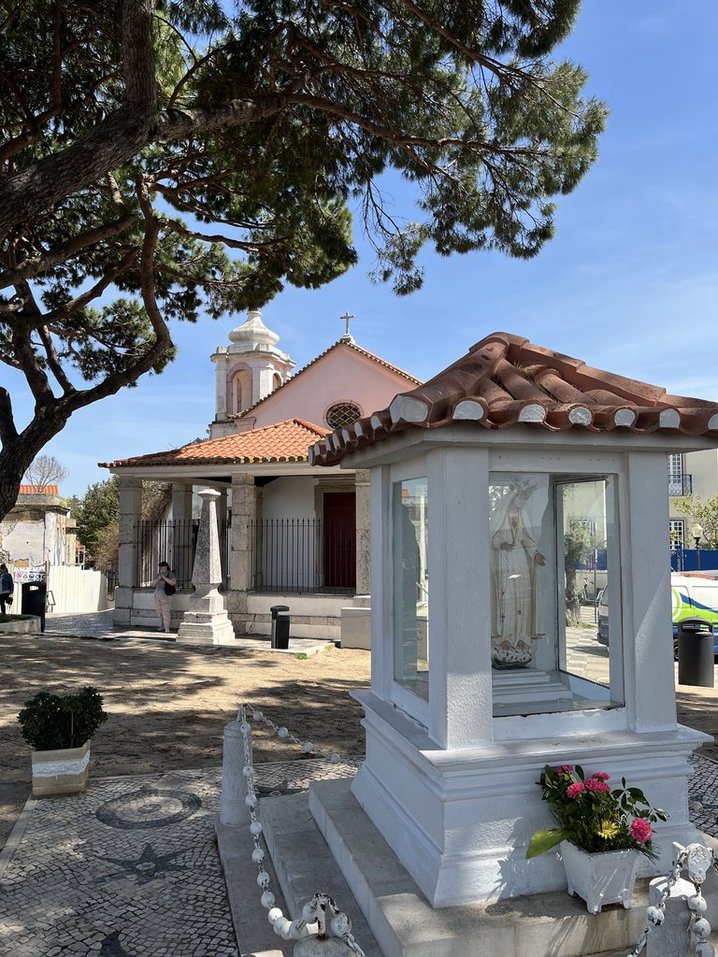
Slightly to the right of that is the 25 April Bridge, connecting Lisbon with Almada. This used to be called the Salazar Bridge, named after the dictator who ordered its construction. It was renamed for the date of the revolution in 1974 that overthrew that regime. Lastly, to the left sits the Castle of Saint George, an 11th century Moorish castle and royal residence. Steps from these stunning views is the 12th century Chapel of Nossa Senhora do Monte.
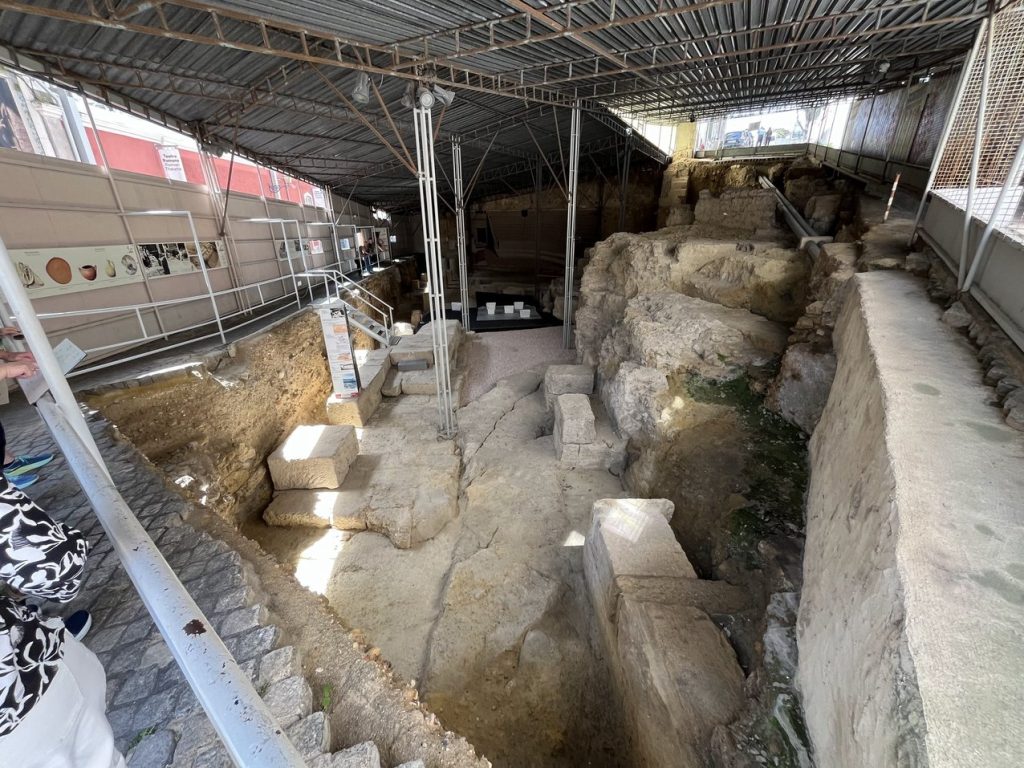
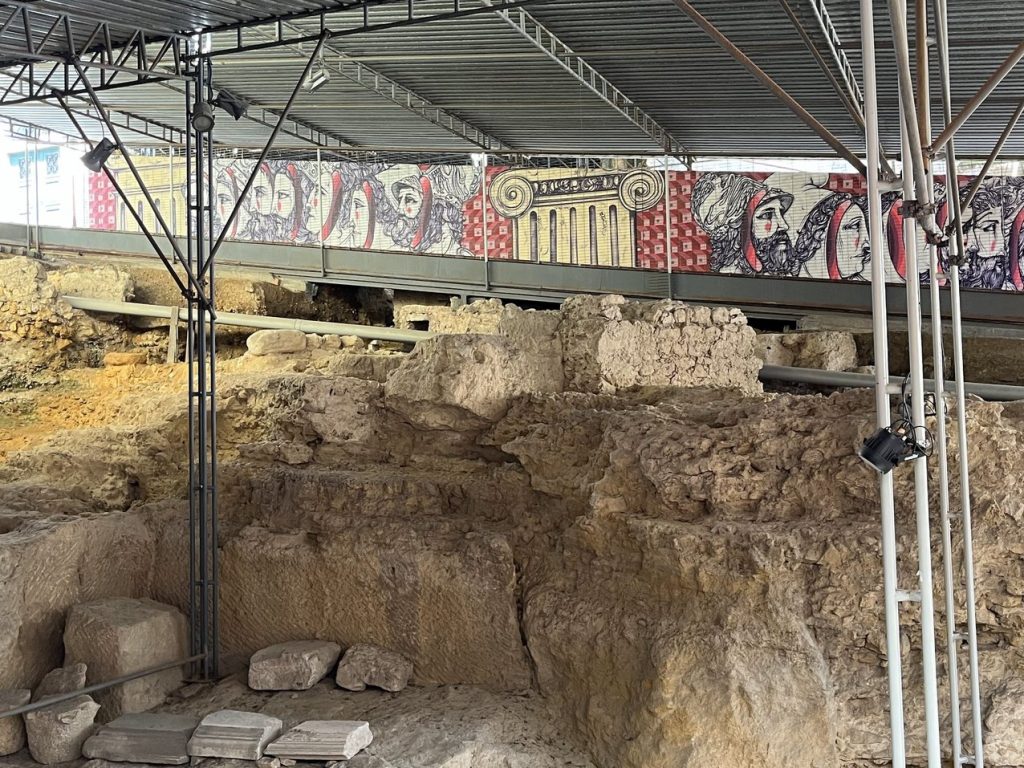
Back in the van, John next brought us to Lisbon’s Alfama district, and Teatro Romana de Lisboa, an archaeological site of an ancient Roman theater. Part of the Museum of Lisbon, the theater was built in the early 1st century AD, during the reign of Emperor Augustus. It was buried in the 4th century AD, and forgotten until it was partially unearthed after the 1755 Lisbon earthquake. Systematic excavations began in the 1960’s.
Leaving the van parked precariously atop a hill, beside the site, John led us down the street to a well-known, family run ceramics shop called By Nunes. This is a small shop known for handmade Portuguese tiles, unique ceramics, and other handcrafted items, and features items from local Portuguese artisans. The shopkeeper was very nice; we purchased tile trivets, and some gifts for the family, then stepped outside, at which time John picked us up in the van, and we set out for a scenic 20 – 25 minute drive to the Belém district, which is situated in western Lisbon along the Tagus river.
Once arriving in Belém, our tour van parked in the museum quarter, within easy walking distance of our next two sites: Pastéis de Belém and Jerónimos Monastery. First, however, it was time for lunch. Lunch was not included in the cost of the tour, but the time to eat it was. John recommended a local place he eats at quite often called Restaurante Adamastor, which turned out to be a cozy, traditional Portuguese restaurant with lots to offer.
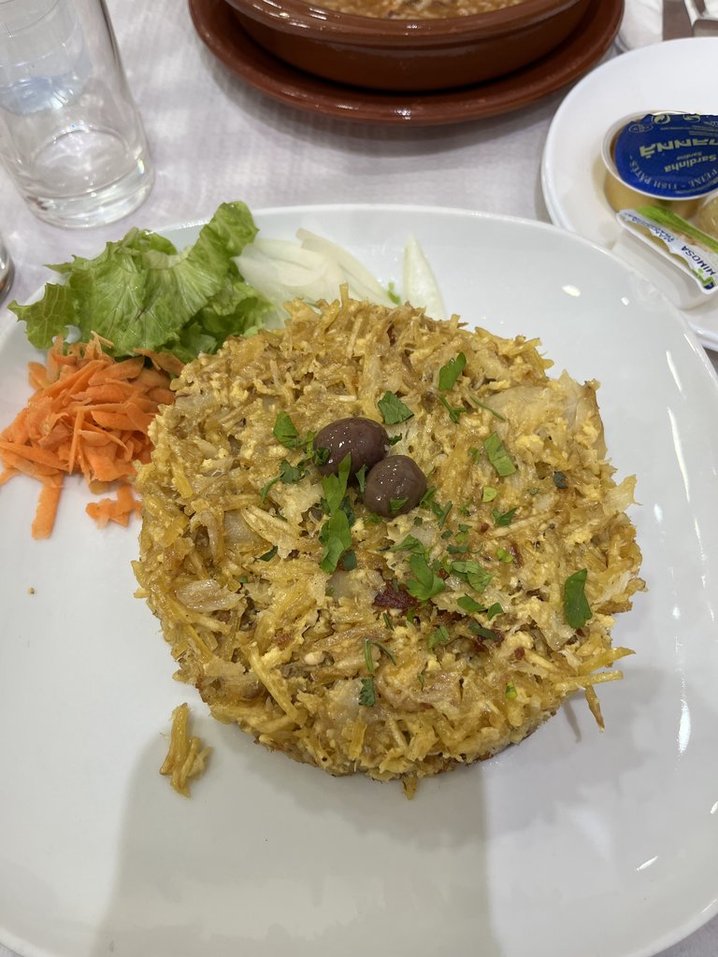
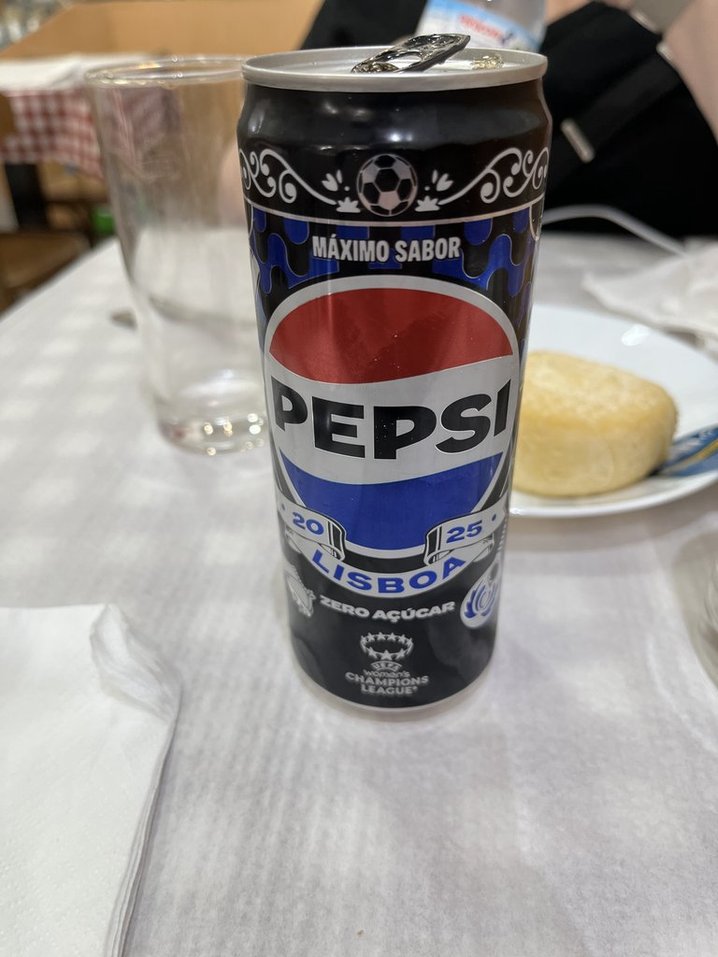
The eight of us from the tour grabbed a few tables. Rona and I shared the Arroz del Polvo (Octopus Rice), and Bacalhau (salted cod) a Bras, along with a nifty, Lisbon-specific can of Pepsi Zero. Both are traditional Portuguese dishes, and were savory and delicious. The Bacalhau a Bras is made of shredded, salted cod, fried potatoes and scrambled eggs to bind it.
Salted cod, or bacalhau, became a Portuguese staple when Portuguese explorers discovered cod in the waters off Newfoundland during the 15th century Age of Discovery. It was a long-lasting, transportable, and relatively inexpensive food source for sailors on long voyages, but due to over-fishing, it is now sourced from other North Atlantic locations, primarily Iceland and Norway.

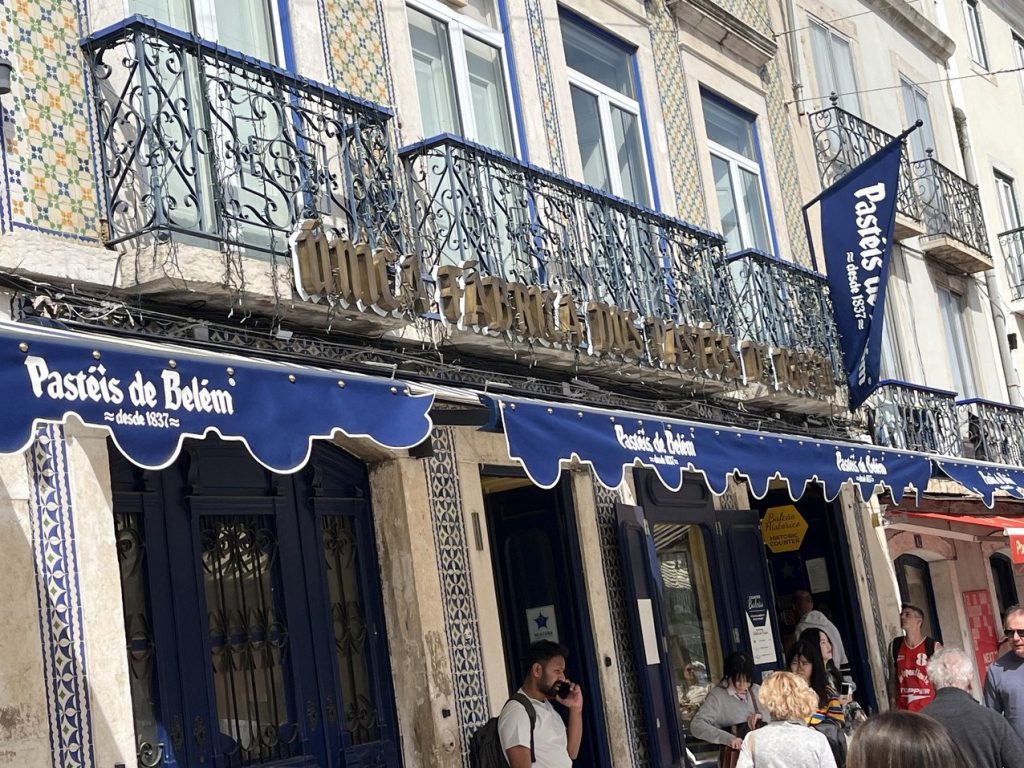
After lunch, we met our tour guide out in front of the restaurant, and made our way across Rue de Belém to Pastéis de Belém Bakery, where we were in store for a tasty treat. Pastéis de Belém are a traditional Portuguese pastry, a type of custard tart, the recipe for which 18th century monks in Jerónimos Monastery supposedly created. The secret recipe was given to what eventually became Pastéis de Belém Bakery, founded in 1837.
Virtually every vlogger who visits Portugal tries these, though they more often actually sample Pastel de Nata, which is a more generic term for this sort of custard tart available throughout Portugal, and which we have found in both Costco and Trader Joe’s here in the U.S. There is considerable debate over who makes the best ones, but the original Pastéis de Belém are only available in this one bakery.
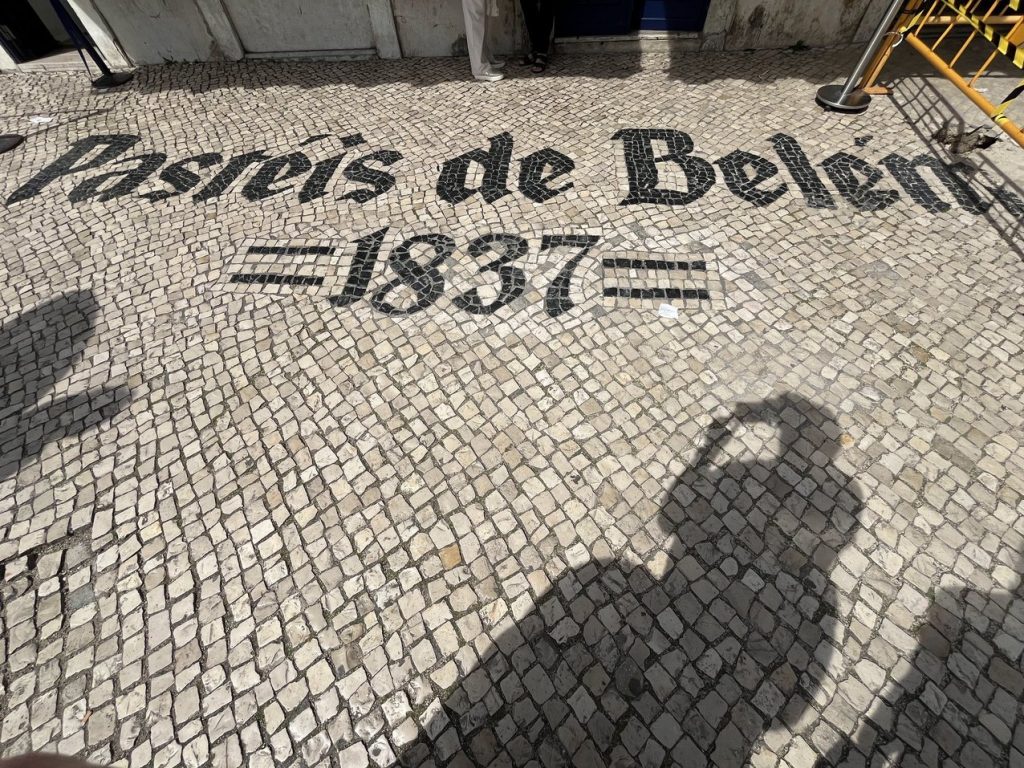
The tour did include these pastries, so John brought us through the bakery into a backroom where at certain times, you can watch the confectioners of the bakery creating these custard tarts. Sadly, we had arrived at a time when nobody was baking, but we did at least get to see the room where it happens. Afterward, we headed outside and walked over to wait outside the Jerónimos Monastery for our tour guide to bring dessert. Laden with bags that included not just the Pastéis de Belém, but also powdered sugar and cinnamon, John passed around the egg tarts, and we helped ourselves to the sugar and cinnamon.

Wow. Just wow. The pastry crust was flaky, and the filling was rich and creamy, and the powdered sugar and cinnamon should be required by international law. Sorry, not sorry, Costco and Trader Joe’s.
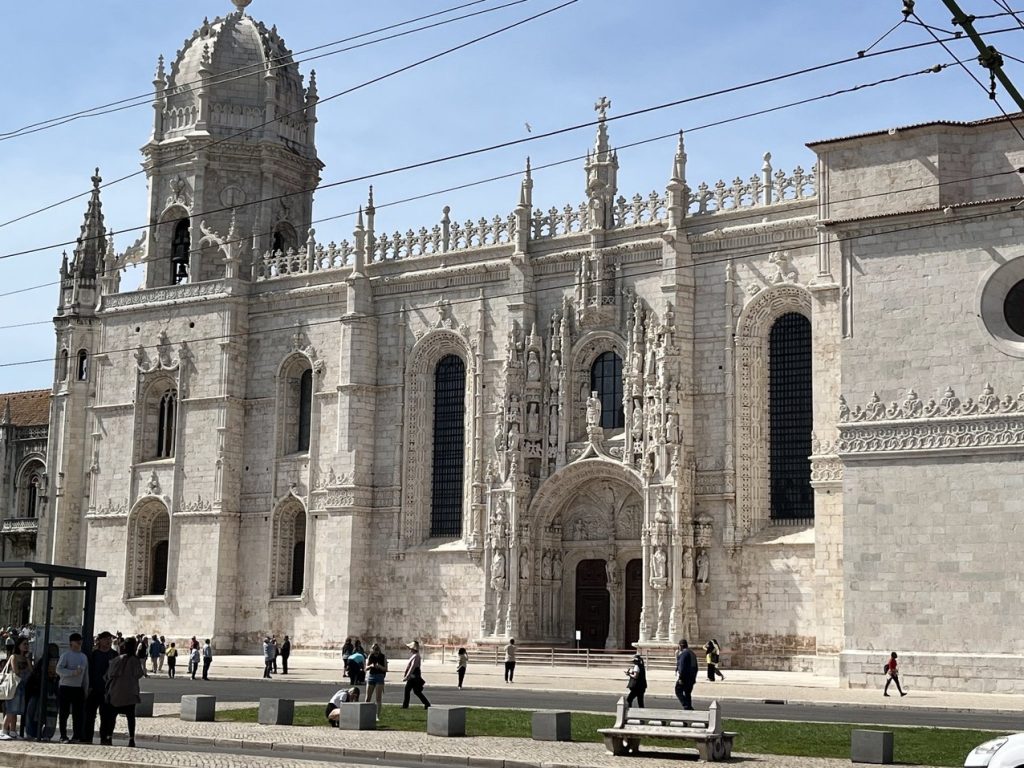
Unfortunately, the tour did not include tickets to go inside the monastery as it was under construction and restoration at the time of our visit. The sugar high and elevated mood from dessert softened the blow, and it is still a stunning building from the outside. So, we snapped a few more photos and climbed back into the van for a short ride to our next stop, Belém Tower.
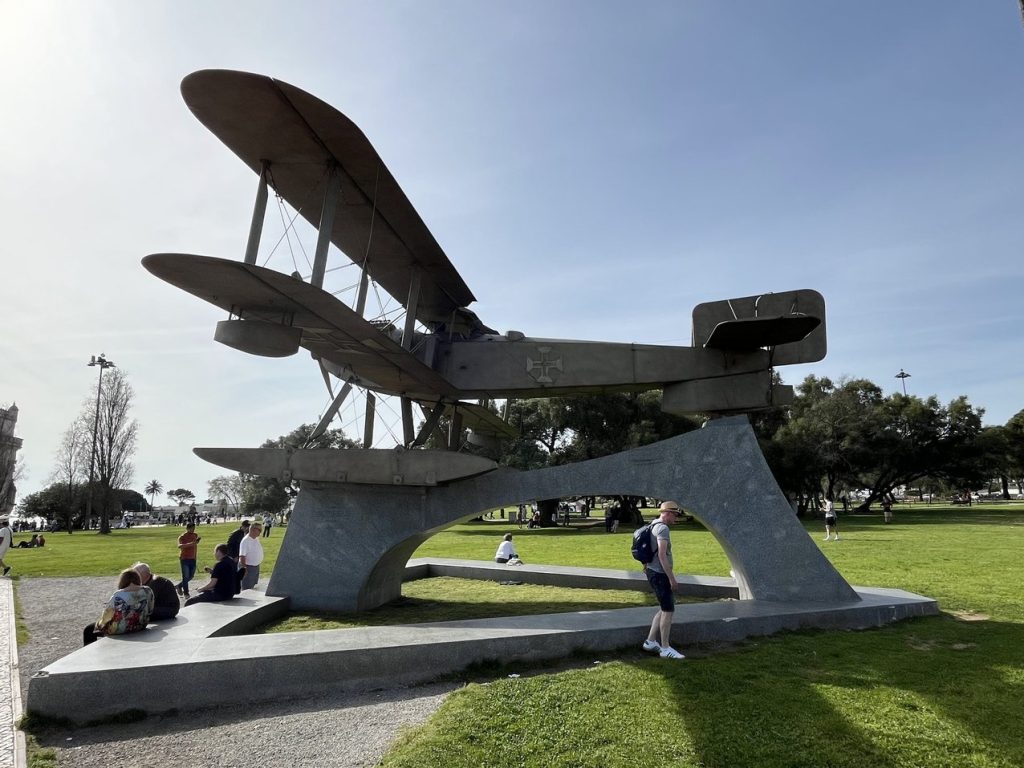
John pulled the van up along Boca do Bom Sucesso, a road along the Tagus River Estuary, where we all got out. Immediately on our right was “Lusitânia”, a life-sized stainless steel replica of the Fairey III biplane, named “Santa Cruz”. This monument is to the first aerial crossing of the South Atlantic by aviators Gago Coutinho and Sacadura Cabral in 1922.
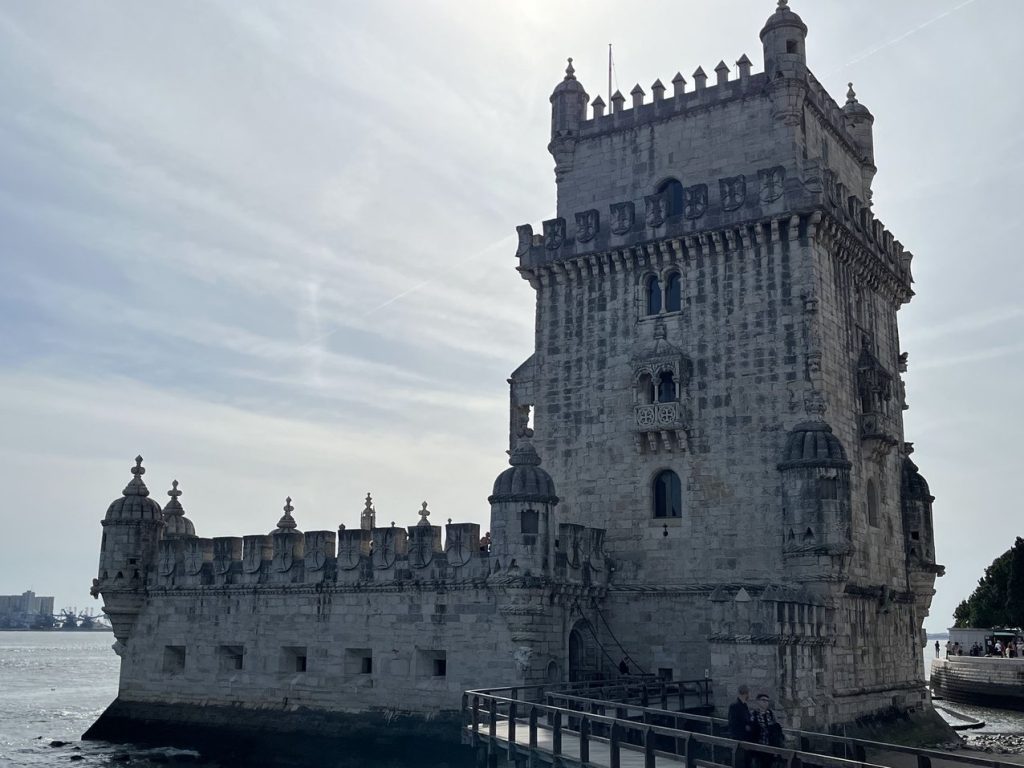
A bit farther along the bank of the estuary sits the four-story Belém Tower, originally built between 1514 and 1519 to defend Lisbon from attacks. It served as a ceremonial gateway to the city. It also served as a point of embarkation and disembarkation for Portuguese explorers and traders during the Age of Discovery. The tower’s dungeons have at different times served as prisons, including for French prisoners during the Napoleonic wars.
There were a few food carts along the street between the tower and the biplane, and we paused at Wine with a View, where we would try Ginjinha, a liqueur made from Morello cherries. Served in a shot glass, it’s dark and sweet, and was on our list, given the recommendation of numerous content creators.
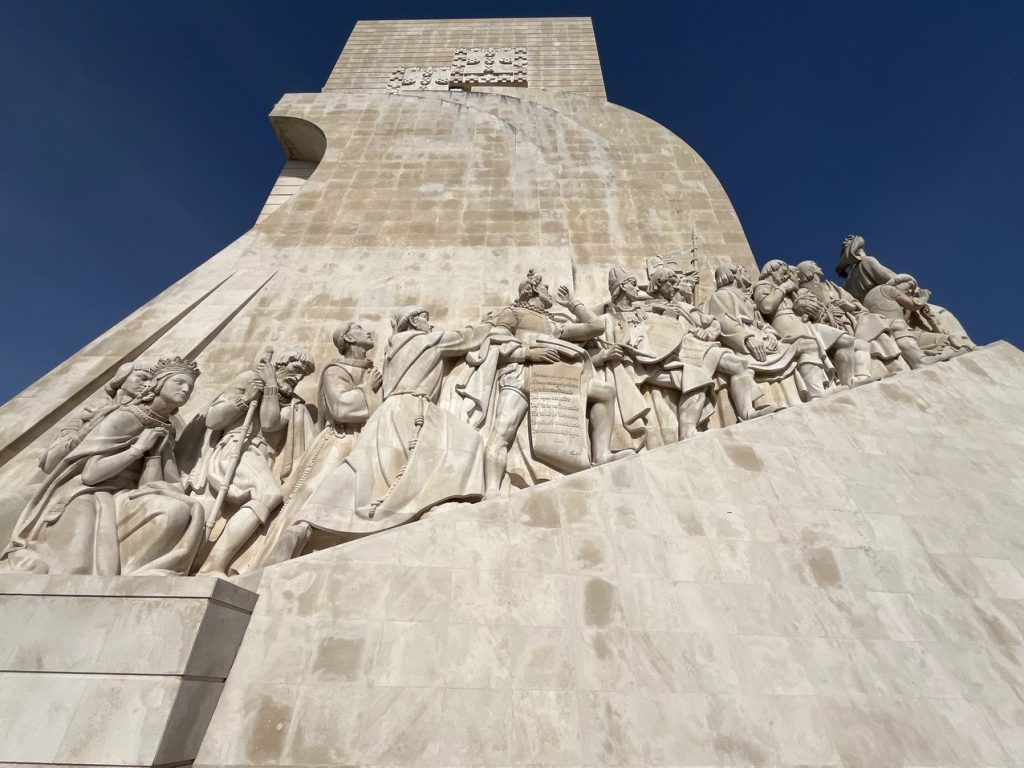
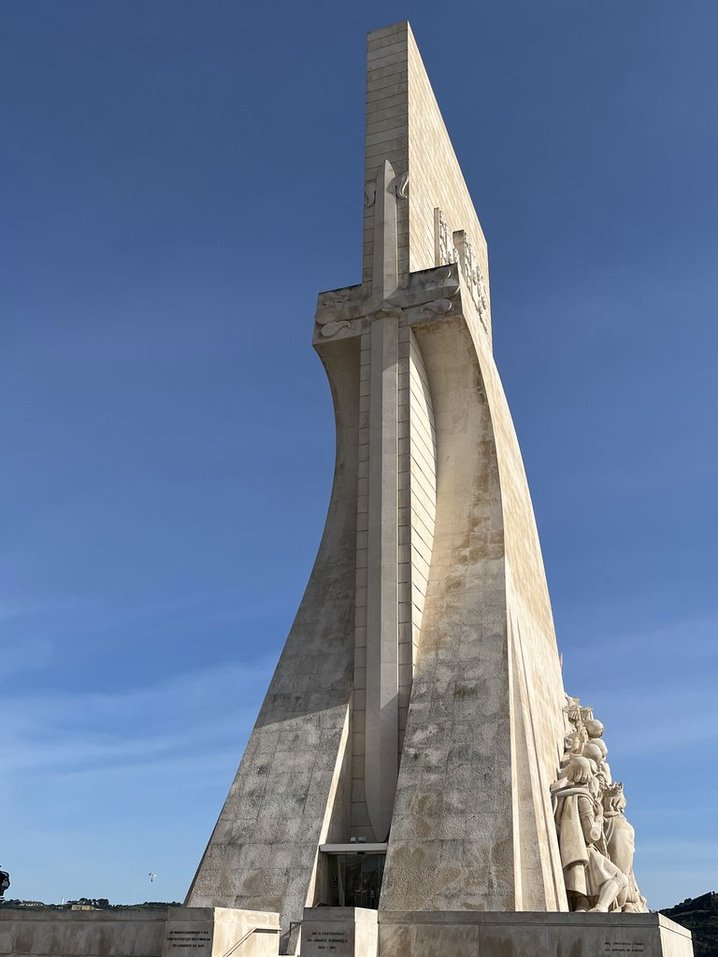
We all hopped back in the van, headed just down the road for our final stop in Belém before returning to the ship: Monument to the Discoveries. Also located on the bank of the Tagus River Estuary, the monument celebrates the Portuguese Age of Discovery during the 15th and 16th centuries, and its design is meant to evoke the prow of a caravel, the type of ship sailed by Portuguese explorers during that time.
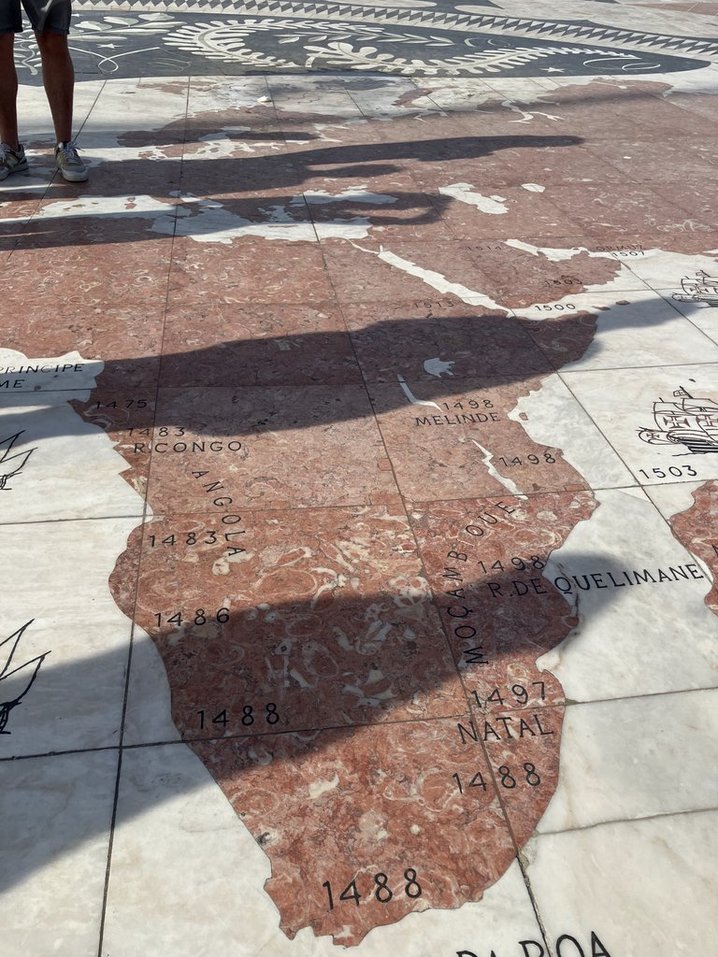
The pavement you stand on as you approach the monument from the street features a large compass rose laid out in limestone tiles. In the center of the compass rose is a fascinating world map, illustrating the main routes of Portuguese explorers, along with ship names and dates. On both sides, the monument itself features numerous statues of the explorers of the age, the scale of which is incredible.
And with that, we climbed back into the van for the 20 minute drive back to the cruise terminal. Along the way, John told us more about himself and his family, and by the time we arrived back at the ship, some of our fellow passengers were exchanging Instagram handles with him, so that they could stay connected. Tomorrow, Porto!
Have you been to Lisbon, and if so, what was your favorite thing to do and see?